EFEastern Front Forum Archive
Read-only public archive · no login or tracking

Archived topic · 139 posts

Who was the best commander in WWII?

Eastern Front

#3080

Re: Who was the best commander in WWII?

Alyonn wrote:personally any general who can't keep his soldiers under control enough to stop wholesale rape and murder of a conquered populace doesn't get my respect to begin with. Nearly the entire female population of berlin was raped, some dozens of times.


Personally, I'd like to see how you'd keep 100,000+ battle hardened, desensitised and sexually frustrated Soldiers under control. It happens in war all the time even under the strictest of Generals, the longer a Soldier is in a war the more he is desensitised to violence; when you've seen 100 bodies crushed by tanks, thousands missing limbs, seen your friends die, the guy next to you take a sniper bullet to the throat and bleed to death, you simply stop giving a crap.

Zhukov was brilliant, but for only one reason - his ability to stand up to Stalin. Without his pushing and arguing, Stalin would have never listened to his Generals and would have basically went ahead systematically making error after fatal error until the Germans were knocking on the Kremlin's door. That kind of move lost it for the Germans; whoever disagreed with Hitler more than often got fired... sometimes literally.
#3095

Re: Who was the best commander in WWII?

Moreover - Zhukov has declared an order, wich says that if soldier would be spotted by any red army officer (or polotiical officer, SMERSH operatives etc) that officer must shoot soldier.
"I'm in ur baze, killin' ur doodz" :-D

Sorry guys. My english sucks :-(
#3139

Re: Who was the best commander in WWII?

I think you mean "if a soldier would be spotted raping* someone. He would be shoot by officer.
Россия!
#3415

Re: Who was the best commander in WWII?

Von Rundstedt or Von Manstein? Can't choose!
Forum post image
#3927

Re: Who was the best commander in WWII?

Micheal Wittman!  If he was a commander or not I respect the Tiger Ace and would have been very scared in my wimpy sherman to see him, I respect mainly for Villers-Bocage.
#4340

Re: Who was the best commander in WWII?

Forget Bocage! The man took out dozens of T-34s in his StuG III! Point 65.5!
Forum post image
#5801

Re: Who was the best commander in WWII?

Our generals (the french) are loosers in this post ...
Just in one vote for DeGaulles (BBC 18 June 1940)and one vote for the other ...

France je t'aime !!!
Allons enfants de la patrie ...
Forum post image
#7013

Re: Who was the best commander in WWII?

Between, Montgomery & Zhukov but i chose Montgomery as he had more patience than other commanders. Patton was a loose cannon, no major strategic thinking at all, just wanted to kill the Germans
#7018

Re: Who was the best commander in WWII?

Here I have a chunk of text about Zhukov from the brilliant "battle of Kursk" by David glantz and johnathan house:

"Zhukov was an energetic, stubborn, and often ruthless commander who approached war with dogged determination. His force of will, often combined with an utter disregard for casualties, proppelled soviet forces through their trials in the initial period of the war and, ultimately, to victory. Like the American general Grant, he understood the terrible nature of modern war and could endure it's effects. He demanded and recieved absolute obedience to orders, he identified with and protected key subbordinates, and, at times, he stood up to and incurred the wrath of Stalin. There was little finesse in his operations, and he used the red army as a club rather than a rapier. His temperament was admirably suited to the nature of war on the Soviet-German front, and Stalin knew it. For this reason alone, Stalin could tolerate Zhukov's occasional failures."
Za Chest Gvardii!
#7205

Re: Who was the best commander in WWII?

Has to be Von Manstein - best offensively minded general, even in retreat!
#8538

Re: Who was the best commander in WWII?

i chose patton
he kicked rommels ass
he let monty run for his money
his army helped in the botb alot by pushing the germans back
if he was allowed he would have bin in berlin a week eurlyer
then that fool zukof that only won whit a minimum casualty list of 1 milion a battle !

i know somethings about the western front (i dont kno everything ill never will but the eastern front i kno s**t so exept that the russians won whit more losses then the germans so that ruled out any russian commander the french did nothing good in ww2 so not them ether the brittish had 1 good tactick let the yanks push we will cover.)

btw that about the r*pe enc enc i hope u know there are more ppl ra*ed by the allies then by axis troops

so respect for all german officers and commanders !
yes .... im sorry ><
bcouse i was  born as a complete utter bastard
#8637

Re: Who was the best commander in WWII?

bastex wrote:


btw that about the r*pe enc enc i hope u know there are more ppl ra*ed by the allies then by axis troops

mostly rape was done by soviets at end of war and in realy sick ways!!
I think best general in WW2 was K.G. Mannerheim ,leading army of ~300k ill equpied soldiers(but very well motivated)and fighting of soviets for 3 months with them
is what makes him in my poinion best general in ww2
"There are no desperate situations, there are only desperate people."
Heinz Guderian
#10233

Re: Who was the best commander in WWII?

Missing Guderian and Mannstein.
#13839

Re: Who was the best commander in WWII?

Rommel hands down
Forum post image
#13878

Re: Who was the best commander in WWII?


but the loss of civilian lives in the case of Germany was incomparably smaller than that of the Soviet Union, in which at least 20 million civilians were killed by the Germans. When the Red Army invaded Germany in 1944, many German civilians suffered from vengeance taken by Red Army soldiers (see Soviet war crimes). After the war, following the Yalta conference agreements between the Allies, the German populations of East Prussia and Silesia were displaced to the west of the Oder-Neisse Line, in what became one of the largest forced migrations of people in world history.

http://en.wikipedia.org/wiki/Soviet_war_crimes

I like Guderian and Rommel, myself :)
You know, there are many people in the country today who, through no fault of their own, are sane. Some of them were born sane. Some of them became sane later in their lives. It is up to people like you and me who are out of our tiny little minds to try and help these people overcome their sanity
#14031

Re: Who was the best commander in WWII?

From here
Machine translation

The topic of mass violence was used against the civilian population of Germany by Soviet troops to enter the territory of the Third Reich, in the last months of World War II was used by Nazi propaganda with the aim of education in the German people to the Red Army as a deadly enemy and strengthen the resilience and fighting spirit defender troops. Emphasis was placed on coverage of the documented executions of Soviet troops against the civilian population caught in the war zone in Nemmersdorfe (East Prussia) in October 1944.

In the postwar period, the subject raised by the immediate parties to the hostilities, the Soviet dissidents (Alexander Solzhenitsyn, Leo Kopelev). Official Soviet historiography bypassed the issue in silence.

At the beginning of the XXI century, this issue has received coverage in the Western media through the publication of contemporary Western scholars such as Anthony Bivor, Cornelius Rayen, etc.

War comes to the German territory

At the end of 1944 direct the fighting that had fought the German army outside of Germany, came to the borders of the Third Reich. Millions of residents of the eastern parts of the country, did not expect such a rapid onset of the Red Army fled in panic from approaching the front under the influence of horrific rumors about what horrors await them with the arrival of Soviet troops. In winter conditions, the chaotic retreat and brutal fighting, many refugees were killed on the road.

The Red Army, after passing through three and a half years of bloody battles in their own territory, in the course of the encountered numerous specific policy of destroying evidence, was held in the Soviet people against Nazi occupation forces. These facts are used by Soviet propaganda, teaches soldiers and commanders of hatred and vengeance the enemy. Writes in his book «The Fall of Berlin» British historian Anthony Bivor,

When the troops of General Chernyakhovskogo 13 January [1945] began an offensive in Eastern Prussia, political worker front produced the slogan: «Soldiers, remember that you are entering a den of fascist beast!»

In this situation, could not be surprised by the massive acts of revenge, which the German population was subjected to in recent months of war - looting, robbery, arson, destruction of property, bessudnye shootings, killings and rape.

For such crimes on the territory of the German troops were involved as the other allied armies, and, obviously, the former foreign workers, forcibly removed to Germany during the occupation.

In the first months at the end of the fighting acts of revenge against the German population continued during the ethnic cleansing and deportation from the territories, who quit as a result of war to Poland, Czechoslovakia and the USSR.

Nazi propaganda

As he wrote in his book «The Last Battle» ( «The last battle») American journalist and writer Cornelius Rayen, Assistant reyhskomissara Goebbels Dr. Werner Naumann confessed to him in private conversation:

«Our advocacy on the Russians and that the population should be expected of them in Berlin, was so successful that we brought the Berliners to the state of extreme terror».

There have been numerous cases of suicide from fear of the coming Soviet troops and despair. For example, in one urban district of Pankow only been recorded 215 cases of suicide. The sense of hopelessness increased due to refugees from East Prussia and the other eastern provinces of the Reich of the horrors and deprivations to which the German population was subjected to the arrival of the Red Army.

Many officials and the ordinary man in the street thought that to save his life can only be passed into captivity Anglo-American troops, coming from the west. Writes Anthony Bivor Germans could hardly count on the indulgence of the Red Army after what had to go through the Soviet and the Polish population in the years of Nazi occupation.

In his diary for March 2nd, 1945 g of the Third Reich propaganda minister Goebbels J. wrote:

Before me is the order of Marshal Konev Soviet troops. Marshal Konev was in this order against the looting carried out by Soviet soldiers in the eastern German territories. It contains some facts, exactly coincides with our data. Soviet troops invade primarily available in the eastern areas of the German stock of vodka, before beschuvstviya drunk, wearing civilian clothing, a hat or a cylinder and travel by bicycle to the east. Konev requires commanders to take stringent action against the expansion of Soviet troops. He also points out that the burning and looting may be made only if ordered. Characterization, which he gives to these facts, very interesting. It shows that in fact in the face of Soviet soldiers, we are dealing with scum steppe. This is confirmed received by us from the eastern areas of the atrocities. They really are appalling. They can not be replicated, even in isolation. First among these is the terrible instruments, from the Upper Silesia. In some villages and towns of the countless victims of rape all the women from ten to 70 years. It seems that this is done on orders from above, as well as in the behavior of the Soviet soldatni can be seen as a clear system. That we are now a major campaign to expand domestically and abroad. Colonel-General Guderian volunteered to read to the representatives of the foreign press and the famous proclamation of Marshal Zhukov, and then made publicly questioning several officers returned to us from Pozena (Poznan) and have seen with my own eyes the devastation produced and committed atrocities.

History

A German journalist Marta Hillers (1911-2001), author of the diary «Eine Frau in Berlin», which she led for the period from 20 April to June 22, 1945 in Berlin, wrote:

To me came the widow Wendt: «I poiyti and to help us with translation, Frau. We have a very good Russian, all safe. »Ms. Wendt, a single woman with a fifty-year purulent dermatitis in rubber knickers. ... The small kitchen was stale air and tobacco smoke. In the glare of candles, I distinguish two women and three Russians. Before them on the table I saw a lot of canned goods, most without an inscription, perhaps, the German military stocks that Russian amass by robbery. The widow then pridvinula to imagine a Russian bank. At the request of women, I began to translate them to what they said. Of the three Russians, no one knew me. One, called Serjoscha, moved me and put an arm around the waist. Another Russian intervened and said: «My brother, for God's sake, leave her alone». And Serjoscha away from me. I was surprised. A speaker was young and handsome face. Dark-haired, educated. His eyes were burning. His hands - the white and narrow. Now he looks at me seriously and said in broken German: «Do not be afraid to». Frau Wendt whispers that this Russian name is Stepan, he had lost after a German bombing attack on Kiev wife and two children, but he is forgiven, and that perhaps it holy. Now, the third Russian pushed me a little, and pock-marked, opened his pocket knife. The knife he gives me and suggested, through gestures, that I ate. The bank was tushonka. Fatty, and large pieces, I throw them in the mouth because it was hungry. All three Russians looked at me with pleasure. Woman Wendt opened the kitchen cupboard and showed us rows of canned goods. All three boys feel very comfortable here. These two women, and repulsive, Mrs. Wendt with eczema, as well as ex-mail address were as mice, bespectacled and with a stunted appearance. How can I transfer them to shame. On the sky, why these people felt this way? I could sit there for a long time. Stepan calming waves radiated protection. I admired him as a picture, it reminded me Aljoscha of The Brothers Karamazov. But the volatile widow, she worried that the beds will be only one Mr. Pauli. While our men, and even the wounded, determined not afraid of the Russians.


Modern Western sources

In Western sources, especially in the recent past, provides a large number of materials on issues related to the looting and violence by the victors against the civilian population of Berlin.

On this occasion, Carl Bam, professor of history at the University of Wisconsin-Madison, said:

«[...] Of course, not everyone behaved well, but the minority has done enough.»

Irish journalist Rayen Cornelius (Cornelius Ryan) in his book «The Last Battle» argued that estimates of doctors with whom he spoke, raped by 20 000 to 100 000 women.

The American Journal «October» 1995 article by Professor Atiny Grossmann «A Question of Silence: The Rape of German Women by Occupation Soldiers» (see Atina Grossmann) details of how these figures were obtained. According to her, despite the collapse of the Nazi state, the health care system continued to function. In Berlin, the doctor with the consent of the Protestant churches have clients - victims of rape, abortion is free of charge. All that is required of women - is to provide written evidence of his signature (affidavit). Such evidence for Berlin had been received from 20 000 to 100 000 (the researchers admit that some of them - false). Article Grossmann noted the uniformity of all these «evidence» - rapists are mostly described as «the Mongolian, or Asian-type». Explaining the surge in the number of abortions, which indicate many authors, Grossmann argues that «nonmedical or noneugenic» nemok for abortion in the Third Reich before the start of 1945, were banned. Not even contraceptives are sold - they were distributed only among ostarbayterov. Characteristically also, that in the «evidence» of women cited as the main motive for abortion is not moral, and social and economic aspects (for example, that she could not afford to have another child).

The film and book Helke Zander and Barbara Yor «BeFreier und Befreite» the authors assume that the number of women in Berlin who have been raped (some - several times), more than 100 000, but the data vary widely. The number of 1,9 million was received by feminists Yor and Zander «on the basis of Hochrechnungen (projections or estimations)» - that is, extrapolation, and evaluation.

Measures of Soviet commanders to combat violence and looting

In the four years of war and occupation of the Soviet Union lost more than twenty million people killed on the front, shot and tortured in captivity, victims of the bombing and shelling of Soviet cities, slave labor and terror in the temporarily occupied territory. In Berlin alone, the Soviet offensive forces lost more than 78 thousand people dead and more than a quarter of a million wounded. Death and deprivation during the war years came to every Soviet family, and hate the soldiers and officers who came to the bloody fighting on enemy territory, has been infinite. At the present time and Russian historians acknowledged that the abuses of the local population by soldiers of the Red Army, was the spring of 1945 alarming. Preventing violence is not possible, but it still was kept, but over time and kept to a minimum.

In January 1945, on the assumption of the Red Army in Germany in East Prussia and Silesia, the Soviet command had taken serious measures to prevent the mass violence against civilians. January 19, 1945 he was the supreme commander of the signed order on the avoidance of ill-treatment of the local population, which was communicated to all personnel. The relevant orders of the subordinate parts and components have been given to the Military Council of fronts, the commanders of armies, commanders of divisions, etc. For example, the Order of the Military Council of the Belarusian-2 Front (commander Marshal KK Rokossovsky) were required to shoot looters and rapists to crime scene.

20 April 1945 he was issued a directive stakes Supreme high command commander of troops and members of the military council of the Belarusian-1 and 1-st Ukrainian front number 11072 on the changing attitudes towards the German POWs and civilians:

1. Need to change attitudes to the Germans as a prisoner of war, and civil. Contact with the Germans better. Ill-treatment of the Germans is their fear and make them stubbornly resist, do not squeeze into captivity. Civilians, for fear of reprisals, organized in gangs. This is disadvantageous to us. A more humane attitude towards the Germans, we will facilitate the conduct of hostilities in their territory and, undoubtedly, will reduce the persistence of the Germans on the defensive.
2. In parts of Germany to the west of the line of the mouth of the River Oder, Fyurstenberg further Neisse River (west) to create the German authorities, as in the cities to put burgomasters - the Germans. Ordinary members of the National Socialist Party, if they truly belong to the Red Army, not to touch, but only to detain the leaders, if they did not have udrat.
3. Improved treatment of the Germans should not lead to a decrease of vigilance and cronyism with the Germans.

- The rate of the Supreme high command - J. Stalin

Commanders of fronts has been ordered to bring the directive «to every officer and soldier of existing forces and institutions Front» and «to parts testing guidelines TOV. Stalin all categories of personnel ».

Public awareness and educational work politorganov accompanied by stringent punitive measures by the military commandant and the military prosecutor's office. According to military prosecutors, in the first months of 1945 for the abuses against the local population had been convicted by military tribunals for more than 4 thousand officers and a large number of rows. Several pilot trials ended in the death penalty.

2 May, 1945 g of the Military Prosecutor 1 st Belorussian Front, Major-General Justice, L. Yachenin in its reports on the implementation of directives stakes Supreme high command and front of the Military Council reported:

... ... Military Prosecutor's Office demanded that the military prosecutors and military connections to take personal control over the execution of critical instructions, and all measures to ensure their implementation. On the basis of military prosecutors issued special orders to bring the facts incorrectly to the German population were made solutions to give the perpetrators to justice, etc.
With regard to the German population of our troops certainly made a significant breakthrough. Facts aimless and (unfounded) Germans shootings, looting and rape of German women has decreased significantly, however ... some of these cases were still recorded.
If the Germans shooting at the present time, almost did not occur, and cases of looting were isolated in nature, the violence against women are still in place, has not stopped yet and baroholstvo which consists of walking our troops on the dumping apartments, the collection of all things and objects, and so e.
Violence, especially robberies and baroholstvom extensively involved repatriated, the repatriation of the following paragraphs, and especially Italians, Dutch and even the Germans. And all these ugliness dump our troops ...

It is hardly possible to expect immediate change in the situation, and even in late May, the Chief politupravleniya the 1 st Belorussian Front, Lieutenant-General Galadzhev reported:

Directive bids Supreme high command to change the attitude towards the German people of the overwhelming mass of troops of the Front understood correctly, the attitude of the Red Army soldiers to the civilian population of Germany in recent times had changed. Now we can frequently observe instances where individual soldiers admitting abuses in relation to the German people, call to order their own comrades.
This however does not mean that we are for a short period of time has been able to achieve an absolute breakthrough in the relations of troops to the German population. It must be right to say that in front of yet there are people who can not come to terms with changing attitudes to the Germans. It is primarily those people whose families are affected by the atrocities the Germans, and they have personal accounts of revenge. Particularly prevalent sentiment, expressing dissatisfaction with the fact that for the German people set high standards of supply. Having said that, the soldiers and officers referred to the fact that the Germans in Berlin are now receiving food and other products more than some families of troops in the Soviet Union.
I believe in one thing only, the power of the human will. © Joseph Stalin
Forum post image

Last edited December 4, 2009 at 7:00 PM by UeArtemis

#14462

Re: Who was the best commander in WWII?

Did loup hack your account? ;D
#14469

Re: Who was the best commander in WWII?


I was thinking that too, but all he did was copy-paste :)
It's damn interesting, though, and I read it all :D

I don't copy-paste much.
I just rant a lot. Then refine what I said.
You know, there are many people in the country today who, through no fault of their own, are sane. Some of them were born sane. Some of them became sane later in their lives. It is up to people like you and me who are out of our tiny little minds to try and help these people overcome their sanity
#15483

Re: Who was the best commander in WWII?

Patton was by the end the standout gen but Ivan was good and also that one gen from Italy that was one of the very few competent ones Mussolini had.
Forum post image
TS3 2.0: ts55.gameservers.com:9374
#15499

Re: Who was the best commander in WWII?


I liked Nimitz :p
You know, there are many people in the country today who, through no fault of their own, are sane. Some of them were born sane. Some of them became sane later in their lives. It is up to people like you and me who are out of our tiny little minds to try and help these people overcome their sanity
#17744

Re: Who was the best commander in WWII?

ConquestSavior wrote:
Rokossovsky played a significant part in the battle of Kursk :)

Where the heck is Guderian?  No list of WWII generals is complete without Heinz :P


This

"Hurry" Heinz Guderian was the best field commander of the war for any army of any nation, in my opinion. The man CREATED the blitzkrieg doctrines, developed them, worked on them, taught them and utilized them with a sense of situations that was un-paralleled. Without him, the armor doctrines of WWII wouldn't have been developed (or not at least as in depth as they were) and as a leading practitioner of these tactics his men won victory after victory.

There is very little doubt that Guderian should have been a Field Marshall. The only reason he never rose to that rank (and thus was overshadowed by other men like Rommel) was because he never was a "yes man" to Hitler. At least 6 times and about half of those in person!) Guderian stood toe to toe with Hitler and attempted to get him to change his plans, listen to his field commanders and tactically, do the right thing. He was always shot down of course, but there was no man who was more fine of a commander than Guderian. God just didn't make them any better than Guderian.
#17857

Re: Who was the best commander in WWII?


So...

Guderian never got the job because he was
the man for the job? :)

- He sure wasn't a good diplomat, lol. But a fine soldier.
- Someone said diplomacy was the art of saying Niiice
doggy until you found a large enough stick ;)


You know, there are many people in the country today who, through no fault of their own, are sane. Some of them were born sane. Some of them became sane later in their lives. It is up to people like you and me who are out of our tiny little minds to try and help these people overcome their sanity
#17959

Re: Who was the best commander in WWII?

Hi,

Only two from Germany , Have voted Carl Rudolif Rundshtedt (Germany) though ....

Rommel , In my opinion is a master tactition , But not the best general ...

Regards
funnyme
Ten soldiers wisely led will beat a hundred without a head.
#17999

Re: Who was the best commander in WWII?

Loupblanc wrote:

So...

Guderian never got the job because he was
the man for the job? :)

- He sure wasn't a good diplomat, lol. But a fine soldier.
- Someone said diplomacy was the art of saying Niiice
doggy until you found a large enough stick ;)


Well your not really looking for soldiers/generals to be diplomats.

For example Gerd von Rundstedt performed very well in the early war. But he was not one of Hitler's favorites. By the mid war he was relieved of command and then placed in command in the West. He was again sacked because his ideals didn't meet with Hitler's. Now that might be a blemish on his record. But that doesn't mean he was a bad commander.

Guderian did so much for the Wehrmacht, even prior to the war. When Germany was just starting to build it's military after disobeying The Treaty of Versailles, they had huge swaths of land and bases they were borrowing from Russia, IN Russia. These training grounds for the Wehrmacht is where the theories of Blitzkrieg were developed. So Guderian was instrumental in the theory of armor tactic theories, strategies and the actual execution/implantation OF these things. Along with that then, he was also the most successful panzer commander of the 4 in Russia.

If Hitler would have stuck to his own original plan and allowed Guderian to attack Moscow much earlier, they defenses wouldn't have been ready and the "gate" to the city could have been flung open by Army Group Center's two Panzer Groups.

Guys like Von Manstein and Rommel had excellent military service records, without question, but they didn't have the contributions prior to the war in the '30s that Guderian had which is why I believe he was the best. 
#18034

Re: Who was the best commander in WWII?


I vote for what Bigpop said :)
You know, there are many people in the country today who, through no fault of their own, are sane. Some of them were born sane. Some of them became sane later in their lives. It is up to people like you and me who are out of our tiny little minds to try and help these people overcome their sanity
#18094

Re: Who was the best commander in WWII?

Loupblanc wrote:

I vote for what Bigpop said :)


;D 8) :-* hahahahaha
#22004

Re: Who was the best commander in WWII?

I want to say Patton simply because he had that 'you cant beat me' additude you want in your commanding officer, and he'd go for the throat in every offensive he conducted, really proving himself and getting the Glory that he wanted from WW2.

I also want to say Rommel for how efficiently he used what little he had to maximise his effectiveness in battle.

The war bred so many Heroic men, and Amazing leaders on every side its hard to choose just one.

Im partial to the Pacific Front and US Marines, but until i looked it up the Marine Corps didnt even have a 4 star General until 1942, aparently Alexander Vandegrift lead the victory at the battle of Guadacanal against the Japanese and earned the Navy Cross and the Congressional Medal of Honor for the occupation and defense of Guadacanal, Tulagi, and Gavutu. (Citing Wikipedia)

You learn something new every day, Semper Fi Marine.
#22140

Re: Who was the best commander in WWII?

The topic is 3 years old now! ;D WoW
And still alive!
Rommel lead. Why is he so popular? He did not win the war in the desert.
I believe in one thing only, the power of the human will. © Joseph Stalin
Forum post image

Last edited January 24, 2010 at 5:25 PM by UeArtemis

#22314

Re: Who was the best commander in WWII?

guderian
#22654

Re: Who was the best commander in WWII?

Patton.  More balls than anyone else.  Turned a lackluster US force in the desert around and beat Rommel at his own game.  Also was extremely successful in ending the Battle of the Bulge.

He wasn't perfect, he was the main reason the M26 manufacturing was slowed in preference to the terrible M4.  If it wasn't for that, the US could have gone from the worst tank of the late war to the best.
#22879

Re: Who was the best commander in WWII?

US had Air cover, Soviets artillery, they both used sledgehammer tactic, but only the Germans (and the Finns) had to do with miserable irreplaceable resources relaying on max effectiveness of few (not always) superior units. The capability of the army commander to exploit it`s troops knowledge and experience as well as their equipment was and still is crucial. In that matter, I must say Mannerheim (Finland), Erich von Manstein (Germany), and Aleksandr Mikhaylovich Vasilevsky (CCCP) witch, btw, no one mentioned. Vasilevsky avoided catastrophe for the Red army more then once, his opinion was very valued in High Command, especially by Zhukov, but his need in man and resources were hardly ever met.
#23209

Re: Who was the best commander in WWII?

Zhukov in my opinion. I watched a documentary about the battle of Kursk that was from the commanders perspective, and saw what he was planning, he was a damn good commander and turned the Eastern Front around single-handedly, and he ALSO destroyed Großdeutschland division, consisting of the 1st, 2nd and 3rd SS PzGrenDiv.

And well, he beat Mannstein. But, if the battle had continued without Hitler taking away Mannstein's armoured divisions, the fate of the eastern front may have been changed. But as it happened in history: Zhukov is the man.
http://i92.photobucket.com/albums/l30/drmooismyname/speakmr2.gif
#25857

Re: Who was the best commander in WWII?

i like Erwin Rommel but too, Bernard Lou Montgomery

so best german commander Erwin Rommel

best allies commander Bernard Lou Montgomery
if you strom beaches there will always be victims.
Here is a good example, http://www.youtube.com/watch?v=aSx20dC_XOo&feature=PlayList&p=9F43321A0B7E35D1&index=5
#26186

Re: Who was the best commander in WWII?

For me it is easily hands down Erich Von Manstein, though I don’t know how you can have a best commander poll without him even nominated.

The only other time any Allied commander achieved so much success, with limited resources against a numerically superior opponent would be O’Connor in North Africa 1940, though because of his capture never seems to rate a mention, despite being one of the most successful campaigns in history.
#26203

Re: Who was the best commander in WWII?

Monty was an incompetent glory-seeking pansy (screwed up everything but Africa).  Patton was a blood-thirsty glory-seeking idiot.  Neither were particularly impressive and are remembered in the west due to a lack of options.

The Germans had the best Generals, followed by the Sovs.  Rommel, Guderian, Zhukov.
Absit invidia.
#26320

Re: Who was the best commander in WWII?

8doczzz1 wrote:
Monty was an incompetent glory-seeking pansy (screwed up everything but Africa).  Patton was a blood-thirsty glory-seeking idiot.  Neither were particularly impressive and are remembered in the west due to a lack of options.

The Germans had the best Generals, followed by the Sovs.  Rommel, Guderian, Zhukov.

Oh such bliss,

So let me get this straight, you put Stalin on the same commanding level as Hitler?

Hell, Stalin didn't even trust half of his gens, thus why it took so long for them to react to the german offensive after the non-aggression pact. 

Forum post image
TS3 2.0: ts55.gameservers.com:9374
#26353

Re: Who was the best commander in WWII?

TITO was the best commander in WWII. To raise the army from peasant,and to fight several German and Italian division's all alone and to win. ;D ;D ;D ;D ;D ;D ;D ;D
#26355

Re: Who was the best commander in WWII?

Sovereign wrote:
Oh such bliss,

So let me get this straight, you put Stalin on the same commanding level as Hitler?

Hell, Stalin didn't even trust half of his gens, thus why it took so long for them to react to the german offensive after the non-aggression pact.


Huh?  I put down 3 names, Stalin and Hitler were not among them.  I stated that I put Zhukov slightly lower than Guderian.  Such bliss.

If you'd like to discuss it though, my take: Stalin was probably a better military leader.  From Kursk to Stalingrad to Normandy and North Africa Hitler did everything conceivable to hinder his commanders.  After the initial purges wrecked his army, Stalin did find a few good people he trusted who were allowed to argue with him- and he took advice.
Absit invidia.
#27190

Re: Who was the best commander in WWII?

Im not sure about the commanders or generals,
but Commander-Chief i think was Stalin (cold think; he was a butcher but he managed to turned the war against the most powerful army on planet at the moment), second Hitler and then Hirohito to me (Pear Harbor strategy was perfect, of 200 planes they lost 8 only i think, and the US lost 1/2 of its Naval force almost)
#28460

Re: Who was the best commander in WWII?

UeArtemis wrote:
The topic is 3 years old now! ;D WoW
And still alive!
Rommel lead. Why is he so popular? He did not win the war in the desert.


The only reason Rommel lost was because his army was under-supplied, he didn't control the Navy or Airforce so he couldn't really do anything about it. He sent dozens of pleas to Hitler asking him to do something about it. But he never did...
Medic!
#28785

Re: Who was the best commander in WWII?

Von Manstien. Handled the southern front after stalingrad, crushed the Russians at Kharkov, commanded and almost won at Kursk and commanded the southern front into 44 when Hitler fired him. By far Hitlers best, without him Russia would have crushed the Germans after Stalingrad and there would have never been a Kursk.
#29123

Re: Who was the best commander in WWII?

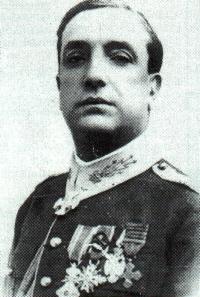
Maj. general Mihail Lascar
Forum post image

10 January 1941 – 10 February 1942: 1st Mountain Brigade

17 October 1941: Mihai Viteazul Order 3rd class

? ? 1941: Steaua Romaniei Order Grand Officer class

? ? 1941: Iron Cross 2nd class

? January 1942: Iron Cross 1st class

18 January 1942: Knight's Cross

11 March – 22 November 1942: 6th Infantry Division

25 October 1942: promoted to the rank of major general

22 November 1942: Oak Leaves to the Knight’s Cross

31 December 1942: Mihai Viteazul Order 2nd class

Maj. gen. Mihail Lascar was born on 8 November 1889, at Targu Jiu. He went to Infantry Officer School between 1908 and 1910, which he finished with the rank of 2nd lieutenant. During the Second Balkan War he was a lieutenant and in 1916, when Romania joined WWI, he had the rank of captain. Promoted during the hard year of 1917 to major, he had to wait another 10 years to accede to the rank of lt. colonel. He became colonel 1934 and in 1939 he received the rank of brigadier general.

On 10 January 1941 he was appointed commander of the 1st Mountain Brigades, one of elite Romanian military formations, which was subordinated to the 3rd Army. He participated in the initial attack on the USSR, when his unit operated in Northern Bukovina. After crossing the river Dniester the unit advanced towards the Bug and then to the Dnieper. It was then involved in the Battle of the Azov Sea („the great vanatori de munte battle”, as they called it), resisting in the first phase of the Soviet assault, with superior forces, fighting sometimes even encircled, until German forces became available and intervened. After that the 1st Mountain Brigade broke through into Crimea in the Salkovo Isthmus, after facing a very determined defense, and then in the pursuit of retreating Soviet forces. In four days his unit marched 180 km and took 2,447 prisoners, until it reached the seaside at Sudak. For a short while, it conducted anti-partisan operations in the Yaila Mountains, until it was moved to Sevastopol in November, where it took the Chapel Hill together with the German 170th Infantry Division. Lascar won the Mihai Viteazul Order 3rd class, the Ritterkreuz and the admiration of von Manstein, who mentions him in his memoirs, but during the second assault on Sevastopol, when Lascar in charge of the 6th Division.

His direct CO, maj. gen. Gheorghe Avramescu (commander of the Mountain Corps), wrote in his file: He is full of energy and commitment, with a lot of initiative. Firm character and personality, self-confident. It proved to be a high quality general with a powerful grasp on his troops.

On 10 February 1942 he was relieved of command and returned home. But this was only for a short while, because a month later he was assigned to the command of the 6th Infantry Division, one of the best of the Romanian army, which in 1941 received training from German instructors. He was also promoted to maj. general and went on to fight at Stalingrad, where the unit was surrounded during the Soviet counteroffensive. He took personal command of the units in the pocket (5th, 6th, 13th, 14th and 15th Infantry Divisions) and coordinated the defense. It is reported to have said to his subordinates: If one of you survives these battles, he must tell the story of our fights. I am a soldier and I remain at my post.

Without food, freezing, grossly outnumbered the troops under his command fought until they ran out of ammo or were killed. A report of 5 December 1942, of SSI (Special Intelligence Service) said that in the hardest moments of the battle, general Lascar showed a high sense of duty, by calmly coordinating the actions of the 6th ID and of the other units of whose command he had assumed. He was an example for the subordinates. When Golovsky was under attack, he was sitting in the Operation Bureau and when everything seemed lost he went together with his staff among the soldiers, even though he could have saved himself. He showed courage, dignity and patriotism.

According to some of his subordinates, during the night of 21/22 November, when the first Soviet delegates arrived to talk them into surrendering, he replied: We fight to the last man. We shall not surrender!

On 22 he decided that the 15th Infantry Division should try to brake through to the south west to friendly lines, towards Bol. Donchinka. In the same time the 6th Infantry Division was supposed to retreat towards Pasheany. He became more and more unsettled and told col. Cristea Stanescu that if the Russians come he would kill himself. His depressive state aggravated when the Soviets started to shell Golovsky at 1700 and at 2100 they attacked. At 1900 he reportedly went out to spot the Soviet artillery positions. Some say that he headed towards Isbusinsky, where the troops of brig. gen. Traian Stanescu were still holding out. He was captured by the Soviets. He had already received the Mihai Viteazul Order 2nd class and the Oak Leaves to his Ritterkreuz (the first non-German officer awarded), plus several citations, but in the evening of 22 November he was defeated.

He was taken to the Kranogor camp, then to Suzdal and Ivanov and finally to the special Camp no. 48, reserved for generals. On 12 April 1945 he was named commander of the second Soviet sponsored Romanian volunteer unit: Horia, Closca si Crisan Division, which he commanded until 12 September. He was then named commander of the 4th Army until 30 November 1946, when the new four-star general became the Minister of Defense. He fell in disgrace and, from December 1947, he was appointed Inspector of the Armed forces, until 12 January 1950, when he retired.

He acted clearly in the favor of the Communists between 45-47 when they were struggling to get the hold on all the instruments of power. However, he was not radical enough. In a report it was shown that he had shown too much sympathy for the Bourgeoisie and the King. Even though he openly supports the party, he secretly continues a campaign against our leaders. He mentions that the friendship with the SU is important, but so are the ties with the UN. He said to gen. Petrescu: What do the Russians want? To destroy the army? To destroy the schools? What do they want? Or In fact I am not the minister. Susaykov is. I just carry out his orders ".

General Mihail Lascar was under investigation for war crimes, but wasn’t found guilty. He died on 24 July 1959, at Bucharest.
___________________________________________________
___________________________________________________
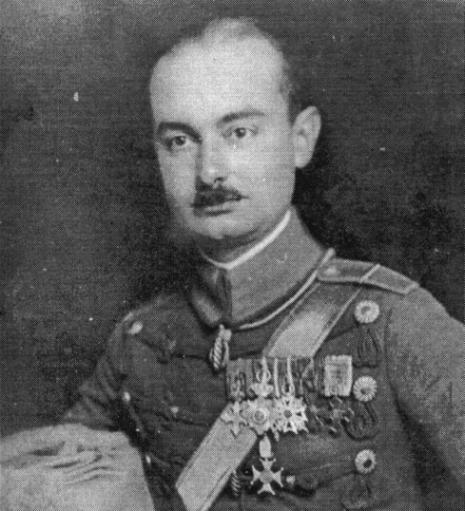
Brig. general Radu Korne
Forum post image

22 June 1941 – 4 November 1942: 6th Motorized Rosiori Regiment

12 February 1942: Mihai Viteazul Order 2nd class

26 September - 6 October 1942: 3rd Mountain Division

5 November 1942 - 4 April 1944: 8th Cavalry Division

18 December 1942: Knight's Cross of the Iron Cross

7 January 1943: promoted to the rank of brigadier general

6 January - 10 March 1944: Guard Division

4 April - 20 September 1944: 1st Armored Division

Radu Korne, "the pride of the cavalry", was born on 23 December 1895 in Bucharest, as part of a noble Romanian family. The name was pronounced "Cornea", but he was very fond of the spelling from the old chronicles: Korné.

He was admitted into the Targoviste Cavalry Officer School in 1913 and graduated in 1915, receiving the rank of 2nd lieutenant. He was assigned to the 9th Rosiori Regiment, but a year later he was moved to the 4th Rosiori Regiment Regina Maria, with which he took part in WWI. In 1917 he was promoted to 1st lieutenant. He distinguished himself during the second battle of Oituz, during the assault on 13 August 1917 on the Tarapan Hill, commanding a machine-gun section in the area of Hill 703. He was practically buried by the explosion of a 150 mm shell. He remained in the first line, being wounded eight days later. Lieutenant Radu Korne was awarded the Mihai Viteazul Order 3rd class, being among the few Romanian WWII generals that won this distinction in the first line during the previous war. He served in the 4th Rosiori also in the campaign against Hungary, as commander of the 2nd Squadron and then of the regiment’s machine-gun group.


In October 1919 he was promoted to the rank of captain and the following year Radu Korne was the aid of the 2nd Rosiori Brigade’s commander. In 1921 he was transferred in the staff of the 2nd Cavalry Division and, at the end of the year, he began the classes at the Military Academy, which he graduated in 1923. He continued his studies in the Cavalry School in Saumur, France, between 1925 - 1926. After his return to Romania, he was named cavalry instructor and tactics professor in the Special Cavalry School in Sibiu and in 1927 he was promoted to the rank of major and a few months after became the school’s director of studies. In 1929, Radu Korne was moved the staff of the 2nd Cavalry Division, from where he was detached for a period that year to the General Inspectorate of the Cavalry. In 1931 he was transferred to the Inspectorate as chief of the 4th Services Bureau and then to the Organization and Mobilization Bureau. IN 1934 he was promoted to the rank of lt. Colonel and assigned to command the 1st Battalion/9th Calarasi Regiment. In 1936 he was the chief of staff of the 12th Division and at the end of 1938 and beginning of 1939 he was the chief if staff if the General Inspectorate of the Cavalry, a very important position within the Romanian cavalry. He was then promoted to the rank of colonel and given the command of the 8th Rosiori Regiment.

The war's outbreak found him at the command of the 6th Motorized Rosiori Regiment from the 5th Cavalry Brigade, which was stationed in Northern Moldavia. Unlike the majority of the Romanian troops, which first saw action from on 3 July, the 6th Motorized Rosiori Regiment started the war on 22 June, when the 3rd Squadron overran the pillboxes on Bobeica Hill. Colonel Korne was quickly remarked by general Neuling, the CO of the German 239th Division, who asked general Ion Antonescu on 30 June to delay his retirement, as he was a very capable officer.

On 4 July the 5th Cavalry Brigade crossed the Prut River and advanced with a detachment commanded by colonel Korne towards Lipnic, reaching the Dniester River on 7 July. The river was forced on 17 July, in the Liasevti sector. The Romanian cavalrymen had to brake through the Stalin Fortified Line, situated on the left bank. The 6th Motorized Rosiori Regiment had some difficulties initially, succeeding in creating a beachhead in the afternoon and taking 12 pillboxes. From 20 July onwards started the advance to the Bug River, his regiment reaching Obodovka that day. On 29 July the Col. Radu Korne Detachment was created from the 6th Motorized Rosiori Regiment, 3 motorized cavalry squadrons and a mountain artillery section. It had the mission to quickly advance to Mikhailovka and Savran. At the beginning of August it reached the Bug and by the end of the month it was on the Dnieper River.

On the Dnieper, the Cavlry Corps, of which colonel Korne's regiment was part of, repulsed several Soviet attempts to cross the river and on 19 September continued the advance north of the Azov Sea. There, from 25 September, it faced the powerful Soviet offensive carried out by the 9th and 18th Armies. The 5th Cavalry Brigade was attacked by a much superior force in the Akymovka area. The 6th Motorized Rosiori Regiment stood its ground, even though the rest of the brigade was pushed back. The offensive ran out of steam after several days and the German-Romanian counterattack led to the encirclement and destruction of the two armies. For his deeds during the battle, colonel Radu Korne was awarded the Mihai Viteazul Order 2nd class.

However, the 11th German Army remained, following this operation, without its only motorized unit: the Leibstandarte Adolf Hitler Waffen SS Division, which was reassigned. Because General von Manstein, the army's CO, needed troops that would make a quick advance after the brake through into the Crimean Peninsula, the Colonel Korne Mechanized Detachment was organized with the 6th and 10th Motorized Rosiori Regiments, an AT battalion, the 54th Motorized Heavy Artillery Battalion and a motorcycle company. The detachment was engaged in the follow-up operation after the front in the Perekop Isthmus was breached on 28 October 1941. Colonel Korne distinguished himself again, this kind of actions probably suiting him very well. His detachment infiltrated to southwest of Simferopol on 31 October, where, isolated, it cut the retreat roads towards Yevpatoria and carried out heavy fights with the Soviet troops heading to Sevastopol.

It was then subordinated to the German 54th Corps and took part in the first siege of Sevastopol. It advanced 5 km along the coastline between 17 and 23 December, reaching the Kachea Valley, which it cleared up until 25 December, advancing another 5 km towards the city.

The Soviets made several landings at Kerch on 26 December. The detachment was immediately sent on the other side of the peninsula, being reinforced with the 3rd Motorized Calarasi Regiment and subordinated to the German 42nd Corps. The Soviet landing at Feodosiya on 30 December forced the detachment, already on its way to Kerch, to turn back and create a new front in the threatened sector. Thus in January 1942 it repulsed, together with the rest of the 42nd Corps' forces, all the attempts of the Soviet troops in the Kerch Peninsula to come to the aid of those at Feodosiya, which were under attack by the German 30th Corps. In February it was moved in the Genichesk area, receiving the mission to guard the coastline.

After the elimination of the Feodosiya beachhead, the Soviet command reinforced constantly the troops in the Kerch Peninsula, thus in May 1942 the 44th, 47th and 51st Armies were found there. For their destruction, general von Manstein, 11th Army's CO, conceived the Operation Trappenjagd. On 5 May 1942, the Korne Detachment received the order to move to Feodosiya, where it was supposed to subordinate to the Groddek Brigade. This was a German ad-hoc unit, which reunited the motorized units of the 11th Army. Beside the Romanian cavalry detachment, which constituted its main force, the brigade had the 22nd Recon Group, the 6th Company of the Brandenburg Regiment and the 560th Mixed AT Company.

The attack started on 8 May. On 9 May, the Groddek Brigade infiltrated through the breach made by the German 30th Corps and advanced on the coast up to Kipcheak, where it arrived in the evening, bypassing the Soviet troops. Colonel Korne, with the bulk of his detachment, secured the brigade's rear and flanks. On 11 May it had to continue the advance towards Saraymin. It arrived there with difficulty, because the Soviet troops in retreat towards Kerch were trying to make their way through the brigade's positions. In the evening, in front of Saraymin, the assault failed and colonel Korne was lightly wounded at the left arm. But the Romanian and German troops, although practically surrounded, controlled the Saraymin-Kerch road. During 12 and in the morning of 13 May, the Soviets desperately attacked to open the retreat route, but were repulsed every time. In the afternoon, with a part of the forces, colonel Groddek and colonel Korne mover to Ortaeli in the attempt to cross the Tabechikoe Lake and to advance to Kamish Burun, which was situated just south of Kerch. On 14 May, colonel Groddek was seriously wounded and left the command of the brigade to colonel Korne. He took Ortaeli and then entered Kamish Burun in the same time with the forward elements of the German 132nd Infantry Division.

The action of the Groddek Brigade, implying obviously also that of the Korne Detachment, which represented the majority of its forces, was decisive, as general Erich von Manstein recognized in his memoirs, because it prevented the creation of a new Soviet front behind the one already breached. The Red Army lost 162,282 men, as well as large quantities of equipment.

After the battle, on 16 May, the detachment was assigned with the defense of the coastline south of Kerch. It returned to the Cavalry Corps, which in August was involved in the offensive in the Caucasus. Colonel Korne was again named at the command of a detachment organized from the motorized elements of the 5th and 9th Cavalry Divisions. It preceded the quick advance of the other Romanian units and on 31 August 1942 it reached Anapa, taking two 152 mm batteries on Nasuruvo Heights, with which it bombarded the city and the port, facilitating its capture. It then continued the advance towards Novorosyisk, which fell to German and Romanian troops at the beginning of September.

Because of the dangerous situation created at the 3rd Mountain Division following the failure of its offensive, on 26 September, colonel Korne was temporarily named at its command, managing in a short time span to reorganize it.

On 7 October, the 5th Cavalry Division started its trip towards Stalingrad, but colonel Radu Korne received a new assignment: the 8th Cavalry Division, which was subordinated to the 4th Army, situated south of the city. After the start of the Soviet offensive, on 20 November, it received the mission to create the link between the 6th and 7th Corps in Aksay sector. He decided to create a strong point at Kraniy Geroy with the mounted elements and to concentrate the motorized elements (the 3rd Motorized Calarasi Regiment) at Korobkin, from where he could quickly intervene in the threatened area. But Krasniy Geroy had to be abandoned on 23 November, colonel Korne retreating his men to Korobkin and then to Kotelnikovo, destroying on the way a Soviet motorized column in cooperation with the German Panwitz Detachment. He created a new defense line in the Dorganof and Sarnutovsky area, which he held until 4 December, when the division pulled back towards Pimen Cherny. It took part in the Wintergewitter Operation, being subordinated to the General Popescu Group. It managed to retake Dorganof on 14 December, after very heavy fights. But the attempt to reach the encircled 6th Army failed and, on 26 December, the general retreat started, the Romanian cavalrymen being permanently harassed by Soviet tanks. On 7 January it crossed the Don Riverand continued its trip to Romania, where it arrived on 4 April 1943. For the way he commanded the 8th Cavalry Division in the hard moments in November-December 1942, as well as for the actions in the spring and summer of the same year, Radu Korne was awarded the Knight's Cross of the Iron Cross and was promoted to the rank of brigadier general.

A year away from fighting followed. During 1943, the 8th Cavalry Division was transformed into a motorized division, the general supervising its reorganization. For two months between January and March 1944, he also held the command of the Guard Division.

From April 1944 he was named at the command of the most powerful Romanian unit: the 1st Armored Division Romania Mare. On 15 July 1944 it was sent to the front in Moldavia and put in the reserve of Army Group Wöhler (4th Romanian Army and 6th German Army). After the start of the Soviet offensive on 20 August 1944, the 1st Armored Division entered in combat south of Bahlui River, counterattacking the Soviet tanks that had broken the Romanian-German front. During the 20/21 August night, the 1st Tank Regiment and the motorized vanatori regiments were separated. The division lost 34 tanks and self-propelled guns, destroying 60 Soviet tanks. The attempts to restore the front on the Bahlui River and then on the Traian Fortified Line failed, the division's elements covering, as much as it was possible, the retreat. On 23 August it created a defensive position north of Roman, between the Siret and Moldova Rivers, where the armistice with the allies found him.

After the offensive against the German and Hungarian troops in Transylvania began, general Korne requested a command on the front, but he was turned down and put at disposal of the Ministry of War on 20 September and on 21 October 1944 he was arrested at the request of the Soviet Commission for the Armistice. He was locked down in the Capital's Military Command, until February 1945 when he was released, only to be put under house arrest. Between 1945-46 he was investigated by the "People's Court", but was found innocent. He was arrested again on 24 March 1948 for "conspiring against the State's security" and imprisoned at Jilava. On 18 April 1849, his health deteriorated and was taken to the Vacaresti Central Hospital No. 1, where he passed away on 28 April 1949, at 1300 hours.
___________________________________________________
___________________________________________________
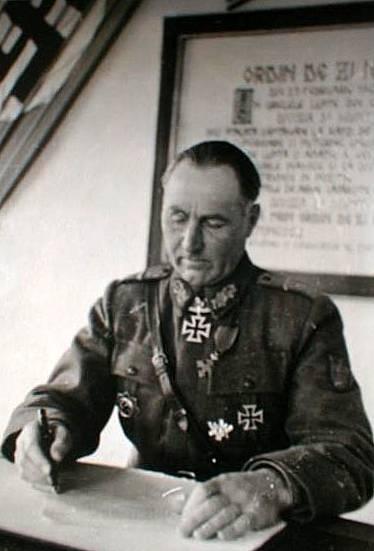
Maj. general Leonard Mociulschi
Forum post image

17 October 1941: Mihai Viteazul Order 3rd class

? ? 1941: Iron Cross 2nd class

6 October 1942 – 8 April 1945: 3rd Mountain Division

? ? 1942: Iron Cross 1st class

25 October 1942: German Cross in Gold

18 December 1943: Knight's Cross

19 February 1944: Mihai Viteazul Order 2nd class

11 May 1944: promoted to maj. gen.

23 March 1945: Mihai Viteazul Order with swords 3rd class

8 April – 20 May 1945: Mountain Corps

Leonard Mociulschi was born on 27 March 1889 in the village Simincea, Botosani county (in northern Moldavia). He was one of the "pure breed" mountain troops divisional commanders of WWII and also one of the most successful. He started his military career in 1910, when he was admitted in the Infantry Officer School. He graduated in 1912 and received the rank of 2nd lieutenant. During WWI he was lieutenant and then a captain (in 1917). He was promoted major in 1920. In 1932 he was assigned the command of the mountain battalion in Sighetul Marmatiei and received the rank of lt. colonel. He held this position until 1937, when he was promoted to the rank of colonel.

On 10 February 1941 he was named deputy commander of the 1st Mountain Brigade, which was under the leadership of brig. gen. Mihail Lascar. This unit was part of the 3rd Romanian Army and saw action initially in Northern Bukovina. It liberated together with the 4th Mountain Brigade the region's capital, Cernauti, where he commanded a group that made the direct attack on the city. Then advanced to the Dniester River, the pre-1940 border with the Soviet Union. On the eastern bank of the river was the fortified Stalin Line the Romanian mountain troops managed to breach in several places on 17 and 18 July, after some very heavy fighting. This is where colonel Mociulschi first distinguished himself, personally directing the crossing under enemy fire. He was awarded the Mihai Viteazul Order 3rd class for this action.

The 1st Mountain Brigade advanced along with the rest of the 3rd Army all the way to the Nogayisk Steppe. There, from 24 to 29 September, it took part in the so-called Battle of the Azov Sea , which resulted in the destruction of the 9th and 18th Soviet Armies. Being the mountain brigade with the fewest losses until then and thus the most battle-worthy, it was selected to participate in the general von Manstein's assault on Crimea. After they had penetrated the defenses in the Salkovo Isthmus, the Romanian mountain troops started a followed closely the retreating Soviet forces. Colonel Mociulschi commanded one of the three detachments organized by the 1st Mountain Division for the operation. It took 1,360 prisoners, including an entire Soviet cavalry regiment.

The "next stop" for the mountain troops was Sevastopol. The German 11th Army started the first siege of the fortress in the winter of 1941. Colonel Leonard Mociulschi was named commander of the Attack Group of the brigade (four battalions), which initially did not have all the forces at its disposal, two battalions being deployed on coastline. By 23 December 1941, the 1st Mountain Brigade managed to take the Chapel Hill and the Chorgun and Karlovka villages.

His conduct during the first year of the war earned him the promotion to the rank of brigadier general. In April 1942 he was reassigned to the 4th Mountain Division again as deputy commander. This unit, commanded by maj. general Gheorghe Manoliu was also in Crimea since 1941. In June and July it took part in the second assault on Sevastopol, where it played a key role in the offensive of the 54th Corps and entered the city together with the German troops. He was awarded the German Cross in Gold for his deeds in this battle.

After the failure of the 3rd Mountain Division's offensive in the Caucasus, its commander, brigadier general Radu Falfanescu was sacked and replaced with brigadier general Leonard Mociulschi. The Soviet winter counter-offensive found the 3rd Mountain Division on defensive positions in the Krimskaya-Abinskaya region. It was subordinated to the German 9th Infantry Division. Mociulschi had under his direct command the 3rd Mountain Group and the German 57th Infantry Regiment. In January 1943 the mountain troops faced the Soviet assaults, which lasted from 12 to 14 and then from 26 January to 18 February. It was repulsed with heavy casualties for the attackers.

After this, the 3rd Mountain Division was moved to Moldovanskoe and subordinated to the 9th, 97th and 101st German Divisions. Thus general Mociulschi did not have a sector under his direct command, as his battalions were assigned to different German units. However, during the third Soviet assault on the Kuban bridgehead, in May 1943, his mountain troops again supported the brunt of the offensive and gave a very good account of themselves.

The 3rd Mountain Division was pulled out of the first line in June and sent to Crimea in August, for rest and refitting. In September 1943, the Kuban was evacuated and during the night of 31 October/1 November the Soviets landed near Kerch and at Eltigen. The bridgeheads were contained and, in December, the 6th Cavalry Division, reinforced with two battalions from the 3rd Mountain Division and German assault guns, eliminated the forces at Eltigen. About 800 Soviet soldiers under the leadership of the CO of the 318th Rifle Division, managed to escape from Eltigen during the night of 6/7 December and occupy the Mithridates Hill, south of Kerch. They entrenched their positions there and received reinforcements from over the straits. Brigadier general Mociulschi received the task to take out the strongpoint and he did so by 11 December. 1,100 Soviet soldiers were killed and 820 taken prisoner. Large quantities of weapons were also captured: 720 submachine-guns, 60 heavy machine-guns and 17 AT rifles. He was awarded Knight's Cross of the Iron Cross for this action.

Between 29 December 1943 and 4 January 1944, he commanded a grouping of mountain troops that, together with the grouping of maj. general Ion Dumitrache, took out over 3,700 partisans in the Yaila Mountains in Crimea. Following his latest victories, Leonard Mociulschi received Mihai Viteazul Order 2nd class. He was also promoted to the rank of major general.

After the Soviet breakthrough into Crimea in April 1944, the 3rd Mountain Division pulled back to Sevastopol, where it was situated on the right wing of the defensive perimeter. General Mociulschi assumed command of the entire German 5th Corps (to which his division belonged), while general Allmedinger was away in Germany. He repulsed several Soviet attacks, the one on 23 April being the most powerful (it was supported by approximately 100 tanks). By 30 April, the division had only two battalions and the mounted squadron in the first line, the rest being either evacuated or kept in reserve. After the Red Army broke the front around Seavstopol, the 17th Army retreated to the Kherson Cape, from the boarding on ships had to take place. During the night of 9/10 May, the 3rd Mountain Division (in fact only the 5th, 12th and 21st Battalions) formed the outposts of the Kherson position. They were evacuated within the following days.

Major general Mociulschi and his division were assigned to the 1st Romanian Army and were deployed on the border with Hungary in southwestern Transylvania. He used the period away from the front to start reorganizing the battalions, which had suffered many casualties in the last year. This process wasn't complete on 23 August, when marshal Antonescu was toppled and King Mihai I announced the armistice.

After several border clashes, the Hungarian Army started its offensive in southwestern Transylvania. General Mociulschi was in command of the Crisuri Group, made up of the 3rd Mountain Division (minus two mountain battalions), 2 regional fixed battalions and one frontier-guard battalion. He faced the 12th and 9th Hungarian Infantry Divisions, which attacked on the Crisul Negru Valley towards Beius on 12 September. The 3rd Mountain Division managed to fight a delaying action on several successive lines. By 17 September it was at the outskirts of the city. The Hungarian troops attacked supported by 30 tanks and breached the defense in several places. General Mociulschi had at his disposal only one AT gun, because the 39th AT Company was also temporarily away. With the intervention of the two battalions, which had arrived in the meanwhile, he managed to save the division from encirclement and to pull back, abandoning Beius. However, in six days of fighting he had delayed the Hungarian offensive long enough for the Romanian and Soviet reinforcements to arrive and caused over 1,200 casualties (including 10 tanks destroyed) to the attackers.

The 3rd Mountain Division was assigned to the Soviet 33rd Corps which supplied an AT regiment and a Katyusha battalion were in order to strengthen it. On 22 September the Soviet and Romanian troops started the offensive. Beius was retaken and the division pushed on towards west, following the retreating Axis forces. It had captured 2,000 prisoners by the time it had reached positions south of Oradea. The Germans launched the Operation Zigeunerbaron and attacked towards Salont. They pushed back the Soviet divisions on its flanks and the mountain troops were in danger of being surrounded. Maj. general Mociulschi managed to retreat his men out of the bulge and save the division. The Soviet command brought 2 tank brigades in the area and attacked. The 3rd Mountain Division advanced west of Oradea, threatening to encircle the Axis troops inside the city and forcing them to pull out.

After this, general Mociulschi and his men passed into pre-1940 Hungary and were engaged in the battle for Debrecen. They cleared the western side of the city of German troops, after some heavy street-by-street fights. Some 274 prisoners were taken and two tanks were captured. The offensive continued until the division reached Miskolc in mid November.

By that date it has received reinforcements from Romania and was completely equipped and manned. It returned under Romanian command and was subordinated to the 4th Corps (from the 1st Army). The new theatre of operations were the Bükk Mountains where general Mociulschi faced the German 18th Gebirgsjäger Division. The fighting was very hard because of the difficult weather, but gradually the Germans were pushed back. During the night of 15/16 December most of the division infiltrated around Axis positions on mountain trails, through blizzard. The Germans were forced to retreat quickly to avoid being encircled.

The 1st Romanian Army crossed into Slovakia, where it was engaged in the Lucenec area. On 14 and 15 January the 3rd Mountain Division crossed the wooded hills west of the city and forced the Axis troops opposing the Soviet 35th Corps in the area to retreat. In February it was engaged in the Javorina Mountains, facing the 8th Gebirgsjäger Division. By the end of the month it had managed to take all the major peaks. He was awarded the Mihai Viteazul Order with swords 3rd class. Only three Romanian generals received the model 1941 3rd and 2nd classes and the model 1944 3rd class of the order, Mociulschi being one of them. Incidentally all were mountain troops commanders.

On 8 April, when maj. general Mociulschi was replaced from command, the 3rd Mountain Division had reached the river Hron. Thus ended almost four continuous years of service on the front. He was named commander of the Mountain Corps in Romania.

In 1947 he was retired and on 12 August 1948 was arrested and imprisoned without a trial. He was released on 10 October 1955 from the Jilava penitentiary, but he was forced to live at Blaj at I. I. Micu Clain Street, no. 33. He had a poor health condition after his detention and no pension, not even proper clothes. In October 1955 he requested that his pension be restored in order to sustain himself. He got a job as a railway worker and from August 1956 he also received a small pension. But it wasn't enough and his wife got a job as a worker a timber warehouse and then at a flower glasshouse. His pension was gradually increased from 1959 onwards. In August 1960 he moved to the village of Purcareni, Brasov county, and in December 1964 in Brasov, where he resided until his death. In 1967 he published his memoirs from the anti-Axis campaign. He passed away on 15 April 1979. His body was incinerated at his request and the ashes were scattered in a clearing in the Postavarul Mountains, where he used to climb.
___________________________________________________
___________________________________________________
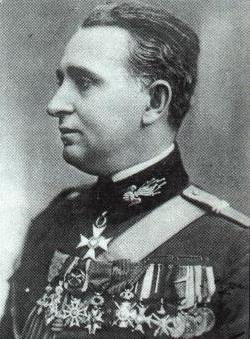
Lt. general Corneliu Dragalina
Forum post image

11 November 1916: Mihai Viteazul Order 3rd class

1 January 1940 - 20 March 1943: 6th Corps

9 August 1942: Knight's Cross of the Iron Cross

1 September 1942: Mihai Viteazul Order 2nd class

? ? 1942: Coroana Romaniei Order Grand Officer class

? ? 1942: promoted to the rank of lieutenant general

Corneliu Dragalina was born on 8 February 1887 in Caransebes. In 1905 he was admitted in the Artillery and Engineer Officer School, from where he graduated in 1907 and received the rank of 2nd lieutenant. In 1910 he was 1st lieutenant and in 1915 captain in the 4th Artillery Regiment, with which he participated in the 1916 campaign, commanding one of the few heavy artillery batteries of the Romanian Army. His regiment was part of the 19th Infantry Division, which fough hard on the front in Dobruja in the autumn of that year.

On 10 October 1916, while his battery was located behind the 51st Infantry Regiment, a powerful Bulgarian attack broke the front of the 3rd Battalion, causing the soldiers to flee. They started retreating in disarray, passing by his battery. Seeing this, Corneliu Dragalina got on the first horse he found, drew his sword and ordered the trumpets to sound the attack, while he rode in the direction of the enemy. This action made the Romanian infantry stop and then follow him. The Bulgarian attack was repulsed and the front line was restored, but Corneliu Dragalina was wounded by a bullet that passed close to his heart and didn't get out. A barge took him and the other wounded on the Danube to Galati, where, his brother Virgiliu, who was the aid of the Navy's commander, took him directly to the hospital. He was operated and the bullet was taken out. For this feat, he was later awarded the prestigious Mihai Viteazul Order 3rd class. In only a couple of days, the two brothers were in Bucharest, by the side of their dieing father, general Ioan Dragalina, commander of the 1st Army, who had been mortally wounded in the fighting on the Olt Valley.

In 1917 he was again promoted (like most of the active Romanian officers at that time). Between 1919-1921 major Dragalina attended the Military Academy. He then rose up in the military hierarchy: lieutenant colonel in 1920, colonel in 1928, brigadier general in 1935 and major general in 1940.

On the 1st of January 1940 he was named commander of the 6th Corps, based in Cluj, a position which he would hold for the next three years. He received one of the first great responsibilities in this high position in August the same year, when he was part of the Romanian delegation that took part in the Turnu Severin Conference with Hungary. The talks aimed at settling the Transylvanian issue between the two countries. Following the Second Vienna Award, general Dragalina had the very unpleasant assignment of head of the Romanian commission in charge of the evacuation of the Northwestern part of Transylvania ceded to Hungary.

The 6th Corps left Cluj and pulled back to the Brasov area. During the legionnaire rebellion in January 1941, general Dragalina with his troops restored order inside the city and occupied the radio broadcast station at Bod. From there he dismissed the news circulated by the legionnaires that he was marching towards Bucharest in front of the 6th Corps in order to help them gain power. This myth, however, still lives on in legionnaire "folklore"

The 6th was moved to the Banat, where, in April, it received the mission to intervene in the invasion of Tugoslavia and occupy the Serbian part of the Banat, should Hungarian troops also attempted it. The Romanian government informed the Reich of its intentions and eventually the Serbian Banat was occupied by German troops and the conflict was avoided.

After the war had started in June 1941, the 6th Corps was kept in reserve inside Romania and was sent to the front only in October 1941. Thus it took part in the final phase of the battle of Odessa, fighting in the northern sector and then entering the city. It was then sent to Crimea for a short while, and then, in the spring of 1942, the 6th Corps moved on the front south of Izyum. It took under its command 4 Romanian infantry divisions (1st, 2nd, 4th and 20th) that had arrived in the area during the Soviet winter counteroffensive. In total there were 64,120 men - a small army.

In May 1942, general Corneliu Dragalina led his troops very well during the second battle for Kharkov. The Romanian troops took no less than 26,432 POWs, as well as a large number of T-60 light tanks, but also the first T-34 and KV-1 tanks captured intact by the Romanian Army. The 6th Corps lost 2,983 men during these operations.

For the German summer offensive, general Dragalina was subordinated to the 1st Panzer Army. The 6th Corps had to keep up with the advance of the German motorized units. On 22 June it forced the river Donetsk and continued the offensive towards the Don. It marched and fought over 450 km in 20 days, a real performance for an infantry unit. From 19 July on, the 6th Corps was subordinated to the 4th Panzer Army, which it helped to force the river Don. At the beginning of September, general Dragalina and his troops were in positions south of Stalingrad.

He received the Ritterkreuz and the Mihai Viteazul Order 2nd class for his corps' actions. He was also promoted to the rank of lieutenant general.

However, the 6th Corps was exhausted. Its divisions had been continuously on the front from the beginning of 1942. On 20 November, when they were assigned to the 4th Romanian Army, general Dragalina's troops received the brunt of the Soviet offensive South of Stalingrad. One of its divisions was surrounded and another two suffered heavy casualties. They pulled back and managed to establish a new defensive line with the help of the German 29th Motorized Infantry Division. The Soviet 51st Army attacked these positions on 25 November, but it was repulsed. The 6th Corps took part in the Wintergewitter Operation advancing towards the Mishkova Valley until 16 December. In the early months of 1943 the remains of the corps returned to Romania.

General Dragalina was replaced at the command of the 6th Corps on 20 March 1943 and named military commander of Bukovina. He abolished the obligatory wear of David's star by the Jews in Bukovina and later obtained from marshal Antonescu the permission to evacuate the remaining Jews in the Cernauti ghetto, before those could be deported or executed by the Germans during the retreat from Bukovina. It is estimated he saved in this manner the lives of 14,750 people.
On 24 March 1944, after the red Army occupied Bukovina, he was put at the disposal of the Ministry of Defense, being sidelined. After 23 August 1944 and the fall of Antonescu's regime, he returned to active duty as General Inspector of the Mechanized Troops from 15 November 1944. On 24 March 1945 he was definitively retired, along with many other senior Romanian commanders. He later lost his house and was harassed by the Communists, but wasn't arrested. He passed away on 11 July 1949 in Bucharest, escaping a tormenting end in the Communist prisons.
____________________________________________________
____________________________________________________
Lt. general Mihail Racovita
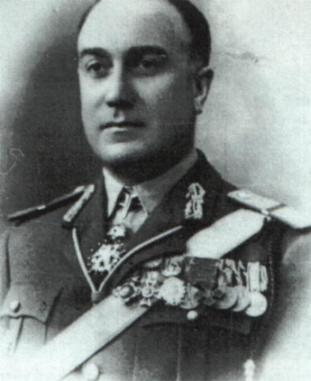
Forum post image

10 January 1941 – 1 January 1943: Cavalry Corps

17 October 1941: Mihai Viteazul Order 3rd class

? ? 1941: Iron Cross 2nd and 1st classes

18 July 1942: promoted to the rank of lt. general

20 March – 1 November 1943: Bucharest Military Command

? ? 1943: Steaua Romaniei Order 1st class

1 November 1943 – 23 January 1944: Mechanized Corps

25 January – 23 August 1944: 4th Army

7 July 1944: Knight’s Cross

24 August – 5 November 1944: Minister of Defense

Mihail Racovita was born on 7 March 1889 in Bucharest. In 1906 he was admitted in the Cavalry Officer School. After one year he was sent in Germany, to the Military School in Hanover, where he remained for two years, graduating in 1909. 2nd lieutenant Racovita returned to Germany the following year, in 1910, to the Riding School in Pandeborn, which he finished in 1911. The same year he was promoted to the rank of 1st lieutenant and in 1916 to captain. In 1917 he was again promoted, like in fact the majority of the Romanian active officers.

After the war, major Mihail Racovita was admitted into the Military Academy, which he graduated in 1921. In 1923 he became lieutenant colonel and in 1928 colonel. He was promoted to the rank of brigadier general in 1936. Four years later he became major general.

In 1941 he was appointed commander of the Cavalry Corps, position which he held during the first 2 years of war, in which his corps advanced from Romania to the eastern coast of the Black Sea, in the Caucasus. Initially his corps was subordinated to the 11th German Army, participated in the reoccupation of Chisinau, the capital of Bessarabia. After that it was subordinated to the 3rd Romanian Army. It broke through the fortified Stalin line and advanced to the river Bug and then to the Dnepr, on the left flank of the 11th Army. In September it crossed the river and took up position north of Crimea. At the end of the month was engaged in the great battle north of the Azov Sea, which resulted in the destruction of the 9th and 18th Soviet Armies. He received the Mihai Viteazul Order 3rd class on 17 October 1941 for the way he forced the river Dniester and followed the retreating Soviet forces, taking 12,783 prisoners and capturing 450 vehicles and 70 tanks.

In 1942 he was promoted to the rank of lieutenant general (on 18 July) and led the Romanian Cavalry Corps in the summer offensive in the Caucasus, on the eastern shore of the Black Sea, where it advanced to the Taman Peninsula and it took part in the capture of Anapa and Norovosiysk. On 1st January 1943 he was replaced. General Racovita then became the commander of the Bucharest garrison, until 1st November, when he was reassigned to the Mechanized Corps. He took over the 4th Army on 25 January 1944 and led it in the defensive battles in Moldavia in spring and summer of 1944, repulsing several Soviet attacks. He was the last Romanian officer who received the Ritterkreuz.

There is a theory about a supposed conspiracy to open the front line for the Soviet troops on 20 August, involving him and several other Romanian generals. He is considered to be the mastermind of the operation. However, this hasn’t actually been proved.

During the Operation Jassy-Kishinev he was away on leave in Bucharest. Thus on 24 August 1944, he was appointed Minister of Defense. He remained in this position until 5 November, when he was named General Inspector of the Cavalry. Then, between 20 May 1945 and 20 May 1946 he was the commander of the General Army Inspectorate No. 3. He was promoted to the rank of general and given the command of the 1st Army until 30 June 1947. On 1 September that year he was retired. In June 1950 he was arrested and imprisoned at Sighet, where he died on 28 June 1954.
Forum post image
http://www.worldwar2.ro/

Last edited February 28, 2010 at 8:57 PM by PSIHOPAT
#29129

Re: Who was the best commander in WWII?

Erich von Manstein.
One of the most unknown geniuses in military history.
#29657

Re: Who was the best commander in WWII?

The 2 most important soviet generals in the battle for stalingrad: Zhukov and Vasily Ivanovich Chuikov

Too bad I couldn't vote for Vasily hehe.

Reasons: For their superior tactics in stalinrad and the operations before and after Stalinrad.

And at artemis: Victors write history, but Rommel is popular for being a relative succesfull commander in Africa, despite his defeat.
#29660

Re: Who was the best commander in WWII?

Flyboy wrote:
UeArtemis wrote:
The topic is 3 years old now! ;D WoW
And still alive!
Rommel lead. Why is he so popular? He did not win the war in the desert.


The only reason Rommel lost was because his army was under-supplied, he didn't control the Navy or Airforce so he couldn't really do anything about it. He sent dozens of pleas to Hitler asking him to do something about it. But he never did...

+1
+1 vote to Rommel

PSIHOPAT wrote:
Maj. general Mihail Lascar...

I have a doubt about that  :-X
Did you write up that stuff or just copy/paste?
Mors Indecepta

Might controls everything, and without strength you cannot protect anything. Let alone yourself...
#29670

Re: Who was the best commander in WWII?

http://www.worldwar2.ro/generali/?article=95

He was born on November 8, 1889, in Targu Jiu. Military Studies: School of Infantry (1908-1910), Superior School of War (1919-1921). Grade: Second Lieutenant (1910), lieutenant (1913), captain (1916), Major (1917), lt. col. (1927), col. (1934), brigadier general (1939), major general (1942), Army General (1947) retired in January 12, 1950. Functions: 1 Mountain Brigade Commander (January 10, 1941 February 10, 1942), 6 Infantry Division (March 10 November 22, 1942). Prisoner of War (November 22, 1942 April 12, 1945). Division Commander Horia, Hen and Crisan "(April 12 September 12, 1945), the Army 4 (September 12 194,530 November 1946), Minister of War (December 1, 1946 December 29, 1947), Inspector General of Army (December 30, 1947 12 January 1950).

"I am soldier and i remain in my post"

On the battlefield, the general was actually awarded the top Brigade (in April 1942 Division) 1 mountain, during fighting in northern Bukovina, between the Dniester and Dnieper, north of the Sea of Azov and the Crimea (1941-1942). Considering her professional qualities, General George Avramescu Corps mountain characterize it at the end of 1941, as a commander "full of energy and determination with a lot of initiative and power of work. In times of crisis on the battlefield , the decision was firm and vigorous energy led to brilliant results. Strong character with a lot of personality. Confident in the power of the soul. The brigade provided strong leadership, bold and with plenty of provision. With a lot of authority and prestige, the sense of honor and dignity developed . The spirit of sacrifice increased the heavy fighting was always the first line where the danger was constant. Law and integrity. It proved to be a general clipping with great authority over his troops and soldiers.

It was noted then fighting in the Don Bend, near Stalingrad, the head of the 6th Infantry Division, in conditions in which many Soviet infantry forces supported by tanks, artillery and throwers have started at November 19, 1942 a very strong counter surrounded sea joined together with other troops in the area (Divisions 5, 13, 14 and 15 infantry). Without any withholding, General M. Lascar and Romanian forces took action coordination encircled by performing without murmur order to resist the German command positions at all costs. Expressing and determination to resist unshakable until the last drop of energy, addressed his close collaborators: "If one of you will survive this fight, he has to narrate how I struggled home. They are soldiers remain in my post.

Lack of food, ammunition almost finished, ice cold and overwhelmed by enemy forces much higher military subordinated to General Lascar fought to the last cartridge, mostly falling on duty as true heroes, in a context in which any attempts to out of encirclement was considered impossible for any Romanian or German headquarters. General attitude was appreciated by Lascar German High Command and the Romanian one, Hitler giving him "oak leaves" to "Knight's Cross of Iron" (the highest German award, offered for the first time an allied military) and Marshal Antonescu has conferred the Order of Michael the Brave Class II. When the marshal learned German commands assessments on the general behavior of Lascar, leader of the Romanian state, he exclaimed: "Splendid!" The head of state said then that "Gen. Lascar was a brave. Taking the example of him, the 6th Infantry Division in the fields picking the toughest battle laurels of heroism, more than any other. May his example serve all. Like any man self-possessed and well-trained, held in perfect conditions to fight his defense division, giving her best to fight as he fought. to serve and that all commanders. Today, when I testimony of foreign witnesses, who lived day day clock watch this great drama units, we concluded definitively about her and commanders. their honor and the nation! "

On December 5, 1942, a document from the Special Intelligence Service noted that "the hardest moments of the battle [General Lascar] proved a high sense of duty, coordinating with composure and skill shares 6 Infantry Division and other units whose order and an assumed. In Cold Blood, lucid and calm was an example to follow for other comrades who have followed the fate. Golovski town was attacked when he was sitting in the office of operations, no jacket, with 'Cross Iron 'in the rank of knight and Order' Michael the Brave 'breast, and when all seemed lost he went to the headquarters in the middle of troops fighter though it could save. He showed courage, dignity, patriotism and dedication.

On the night of 21 to 22 November 1942, when at the command post of the 6th Infantry Division was presented the first Soviet parliament to demand the surrender of General Lascar decided: "Let us not look weak to Russia, that country will judge the facts ". Responses in the hours following the Soviets had basically a similar content: "We fight until one. We do not teach".

The desperate situation in which there were large units subordinated to the afternoon of November 22, 1942, General Lascar decided that the 15th Infantry Division has sought to break through the encirclement device and retreat to the south west in the direction of town Bol. Doncinka and 6th Infantry Division to retire in three columns to Pasceani. Meanwhile, as they had to declare his close associates, Gen. Lascar began to show signs of alarm, saying the colonel Cristea Stanescu, head or staff, that "if there Russians" to commit suicide. Depressed mood of the general was triggered unfortunately even when the situation in Golovski, his point of order had been seriously damaged from bombing by Soviet artillery town (17 hours) and then attack them by Soviet tanks and infantry (at 21). From 19 o'clock when he came out of the building control position to spot Soviet artillery positions, his close associates have not know anything about General Lascar. Some of them said later, that together with General Nicholas Mazarini went to Isbusinski, which resisted the troops commanded by General Traian Stanescu. In that confusing situation both generals were captured by the Soviets.

Cited by agenda on the military headquarters and other large units, praised the comrades and allies, General M. Lascar of captivity in the evening went to November 22, 1942. And even if that occurred after a severe defeat, his behavior was an example. He was interned in camps in Krasnogor, Suzdal, Ivanov and the camp no. 48 (especially for generals) to April 12, 1945, when he was entrusted command of the second major Romanian volunteers formed units within the USSR, the Kotovsk, which was given the name of Division Horia, Hen and Crisan.


Fell into disgrace, General Lascar would soon be removed from any function and investigated for "war crimes against humanity". He died July 24, 1959, in Bucharest.

Forum post image
http://www.worldwar2.ro/

Last edited March 7, 2010 at 1:51 PM by PSIHOPAT

#29733

Re: Who was the best commander in WWII?

von Manstein  ;) 1+.

hes just way too superior.
#29774

Re: Who was the best commander in WWII?

PSIHOPAT PLEASE just send a link you just took up about all of a page REPOSTING what you could post with one or two links; please just send the links next time thank you.
#29817

Re: Who was the best commander in WWII?

That link from above is invisible ?
http://www.worldwar2.ro/generali/?article=95

Also...anyone who have doubt about what is posted by me,and have interest,can search with google for more informations.
Forum post image
http://www.worldwar2.ro/
#29853

Re: Who was the best commander in WWII?

hmm oh no I believe what you posted up above because its the same thing that's in the link :). What I was saying was that just sending the link would make your whole post nice and short instead of two posts taking up all that space